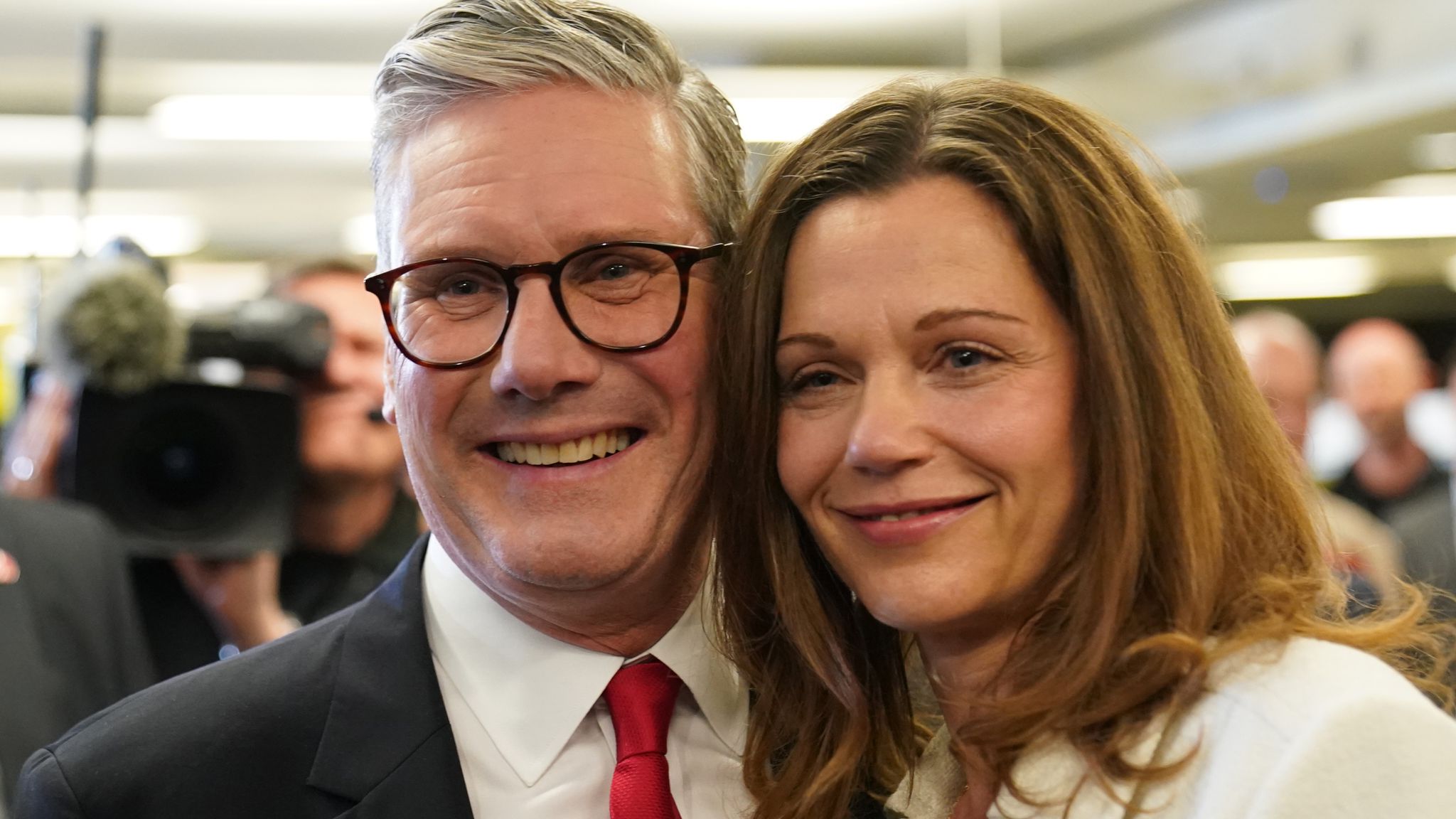
Victoria Starmer represents a different model of political spouse visibility, one that prioritizes functional privacy over public profile. As the partner of the current Prime Minister, her approach to media engagement reveals strategic choices about attention management that contrast with previous patterns. This isn’t accidental positioning. It’s a deliberate framework designed to protect professional autonomy and family stability under conditions that inherently generate scrutiny.
The data tells us that she continues working in her role within the National Health Service rather than transitioning to ceremonial or representational duties. That decision carries implications that extend beyond personal preference into questions of precedent, expectations, and the evolving definition of what partnership with political leadership requires.
The Strategy Behind Low-Profile Positioning And Its Trade-Offs
Victoria Starmer’s approach to public visibility centers on maintaining her existing professional role while minimizing media appearances and declining traditional spouse-of-leader responsibilities. She accompanied Keir Starmer to Buckingham Palace for his appointment and to Downing Street for his first address, then largely withdrew from public-facing activities.
Here’s what actually works when you’re trying to preserve normalcy under abnormal circumstances: clear boundaries established early and reinforced consistently. Keir Starmer stated from the outset that the family would not participate in photo opportunities with their children and would not share the children’s names publicly.
That framework creates a buffer that other political families haven’t maintained as strictly. The trade-off, though, is that minimal visibility can generate its own speculation. When people lack information, they fill gaps with assumption, and managing that dynamic requires accepting that some narrative control gets surrendered in exchange for privacy protection.
Professional Identity As Anchor And Privacy Shield Under Scrutiny
Maintaining her NHS role provides Victoria Starmer with identity separation from political office that full-time ceremonial duties wouldn’t allow. She previously worked as a solicitor before transitioning to public health work, which means she brings established professional credentials independent of her spouse’s political career.
From a practical standpoint, continuing employment outside political structures creates natural reasons to limit public appearances without needing explicit justification for each absence. It also provides routine and purpose that doesn’t depend on electoral outcomes or approval ratings.
The reality is that professional continuity offers stability that ceremonial roles can’t replicate. When your daily work remains constant despite your partner’s career changes, you maintain control over a significant portion of your life that would otherwise get subsumed into political demands. That autonomy has measurable value, even if it comes with coordination complexity.
Family Protection Strategies And Risk Calculation In Public Life
The Starmers have maintained strict protocols around their children’s privacy, including withholding their names from public discussion. This goes beyond standard reluctance to use children in political messaging and into deliberate information limitation designed to reduce their exposure profile.
What I’ve learned is that once information enters public circulation, it becomes permanent and uncontrollable. Names, ages, schools, interests—each data point creates targeting surface for both benign interest and malicious attention. The decision to withhold even basic identifying information reflects risk assessment that prioritizes child safety over political benefit.
There have been instances that tested this approach, including protesters gathering outside the family residence with banners and symbolic displays. That kind of direct intrusion validates the protective instinct behind privacy protocols, even as it demonstrates the difficulty of maintaining boundaries when political decisions generate intense opposition.
Narrative Management When Visibility Itself Becomes The Story
The relative scarcity of public information about Victoria Starmer means that the available details get amplified and scrutinized disproportionately. The story of how she and Keir Starmer met—involving a phone call where she questioned his approach to legal documents—has been repeated across multiple profiles because it’s one of the few personal anecdotes in circulation.
Look, the bottom line is that information scarcity creates its own attention economy. When there’s little to report, media outlets recycle the same details repeatedly, and each small revelation gets treated as significant. This can create pressure to provide more content just to dilute the concentration of focus on limited data points.
The challenge is that selective disclosure requires trusting that boundaries will be respected, and political media operates under competitive pressure that doesn’t always honor those boundaries. The strategy only works if the couple maintains discipline and accepts that criticism for being “too private” or “insufficiently accessible” comes with the approach.
Practical Implications Of Dual-Career Models In Leadership Families
The decision for Victoria Starmer to maintain independent employment while her spouse serves as Prime Minister establishes precedent that may influence expectations for future political families. It signals that partnership with political leadership doesn’t automatically require sacrificing professional identity or assuming ceremonial duties.
From a practical standpoint, this model only functions if institutional support systems accommodate it. Security requirements, scheduling coordination, and public perception management all become more complex when the leader’s spouse maintains separate professional obligations and physical locations throughout the day.
The reality is that this approach works better for some roles than others. Public health work in the NHS doesn’t involve the same commercial conflicts or appearance issues that private sector employment might create. The nature of the work matters as much as the principle of continuing employment.
What matters going forward is whether this model proves sustainable or whether practical pressures eventually force modification. The balance between family autonomy and public expectation remains under constant negotiation, and outcomes shape the landscape for everyone navigating similar dynamics.