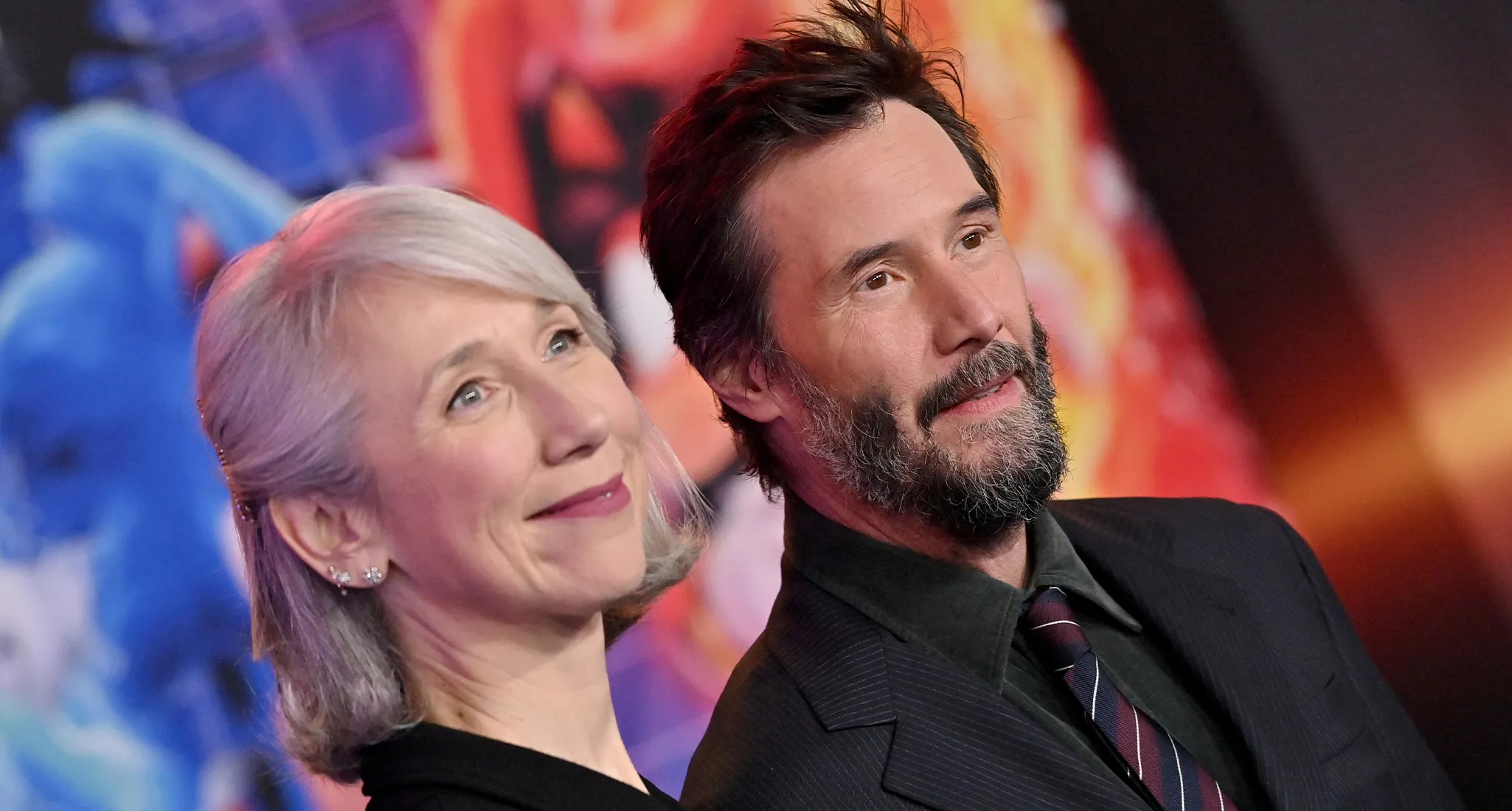
The phrase “Keanu Reeves wife name” has become a case study in how misinformation spreads faster than correction. The actor is not married, though that fact has been drowned out by AI-generated wedding announcements and speculative headlines that treat rumor as confirmation. His longtime partner, Alexandra Grant, recently addressed the confusion directly, clarifying their relationship status while warning followers about fabricated content.
What makes this situation instructive is not the rumor itself, but the mechanics behind why it gained traction. Grant and Reeves have been together since their relationship became public, yet the lack of traditional milestones—engagement announcements, wedding registries, paparazzi wedding photos—creates a vacuum that speculation fills. The reality is that public curiosity doesn’t pause for privacy.
The Signals Behind AI-Generated Content And Reputational Risk
AI-generated images depicting Reeves and Grant in wedding attire circulated widely before either party issued a denial. These weren’t crude manipulations; they were polished enough to pass casual scrutiny, which is precisely the problem. Grant’s Instagram response included a genuine photo of the couple kissing at James Turrell’s Roden Crater, deliberately contrasting real documentation with synthetic fabrication.
From a practical standpoint, this represents a shift in how reputation management operates. The old playbook assumed that false information would eventually collapse under its own weight. That assumption no longer holds when synthetic content can be produced at scale and distributed before verification catches up.
Reeves’ publicist issued a direct statement: “It is not true. They are not married”. The clarity is deliberate, leaving no room for interpretive wiggle. But the correction reached a fraction of the audience that saw the original rumor, which is the recurring challenge in attention-cycle management.
Timing, Privacy, And Why Confirmation Matters More Now
The couple made their relationship public during a red carpet appearance, a calculated move that acknowledged public interest without surrendering control over narrative details. Since then, they’ve shared glimpses—Reeves discussing motorcycle trips together, affectionate moments at industry events—but never the structured timeline that traditional celebrity relationships follow.
This creates what I’ve seen play out repeatedly: the absence of information gets filled with assumption. The pattern is predictable. Long-term relationship plus public affection plus no wedding announcement equals speculation that they must have married in secret. The logic seems sound until you realize it’s built on the premise that all relationships follow the same trajectory.
What’s actually happening here is a refusal to participate in a specific type of public performance. Reeves and Grant attend events together, discuss their partnership in interviews, and document their time together on social media. They’re not hiding. They’re simply not providing the markers that audiences have been conditioned to expect.
The Reality Of Narrative Control In Platform Economies
Look, the bottom line is that denial doesn’t travel as far as speculation. Grant’s Instagram post addressing the rumors received engagement, but it was a defensive move—correcting rather than leading. That’s the structural disadvantage of reactive communication in environments where algorithmic distribution favors novelty and emotional intensity over accuracy.
The phrase “Keanu Reeves wife name” itself reflects this dynamic. It’s a search query born from assumption, treating marriage as a confirmed fact and seeking only the detail of a name. The volume of that search term likely spiked when AI-generated wedding images circulated, creating a feedback loop where increased interest generates more speculative content, which in turn drives more searches.
From a practical standpoint, this is where traditional PR strategy hits its limits. You can issue corrections, but you can’t force algorithmic platforms to prioritize those corrections in search results or social feeds. The data tells us that sensational claims—especially when accompanied by convincing visual content—will outperform factual rebuttals in terms of reach and engagement.
Pressure, Audience Expectation, And The Marriage Timeline Narrative
There’s a cultural script that long-term relationships are supposed to follow, and public figures feel the pressure of that expectation more acutely. Reeves has been open about the happiness he’s found with Grant, describing moments of simple connection and shared adventure. But that openness hasn’t included conforming to the traditional relationship milestones that audiences use as waypoints.
What I’ve learned is that this kind of deviation from expected patterns generates its own form of attention. It’s not neutral. The absence of a wedding becomes its own story, which is why “secretly married” rumors emerge repeatedly. The narrative momentum seeks resolution, and when the couple doesn’t provide it, speculation fills the gap.
Reeves addressed this directly at a recent premiere, noting that marriage rumors “wasn’t the first time” and acknowledging the couple has been together for a long time. The tone was casual, almost dismissive, which is a deliberate signal: this isn’t a source of concern or frustration. But it also doesn’t stop the cycle.
What Actually Works When Speculation Becomes The Story
Here’s what actually works in these situations: consistent, factual communication delivered without emotional escalation. Grant’s Instagram post did exactly that—real photo, clear statement, light tone. Reeves’ publicist followed the same approach with a brief, unambiguous denial. Neither response fed the drama or provided additional fodder for speculation.
The tradeoff is that this approach doesn’t generate the same reach as the original rumor. It’s effective for anyone actively seeking accurate information, but it won’t reverse the impression left on passive audiences who encountered the AI-generated images and moved on without seeing the correction. That’s not a failure of strategy; it’s a structural reality of how information spreads in decentralized media environments.
The other element that matters here is the couple’s ongoing public presence. They continue to appear together at events, share moments on social media, and discuss their relationship in interviews. That sustained visibility provides a counter-narrative to any suggestion that they’re hiding something or that the relationship exists only in tabloid speculation. The reality is documented and accessible; it just doesn’t match the specific story that audiences were expecting.