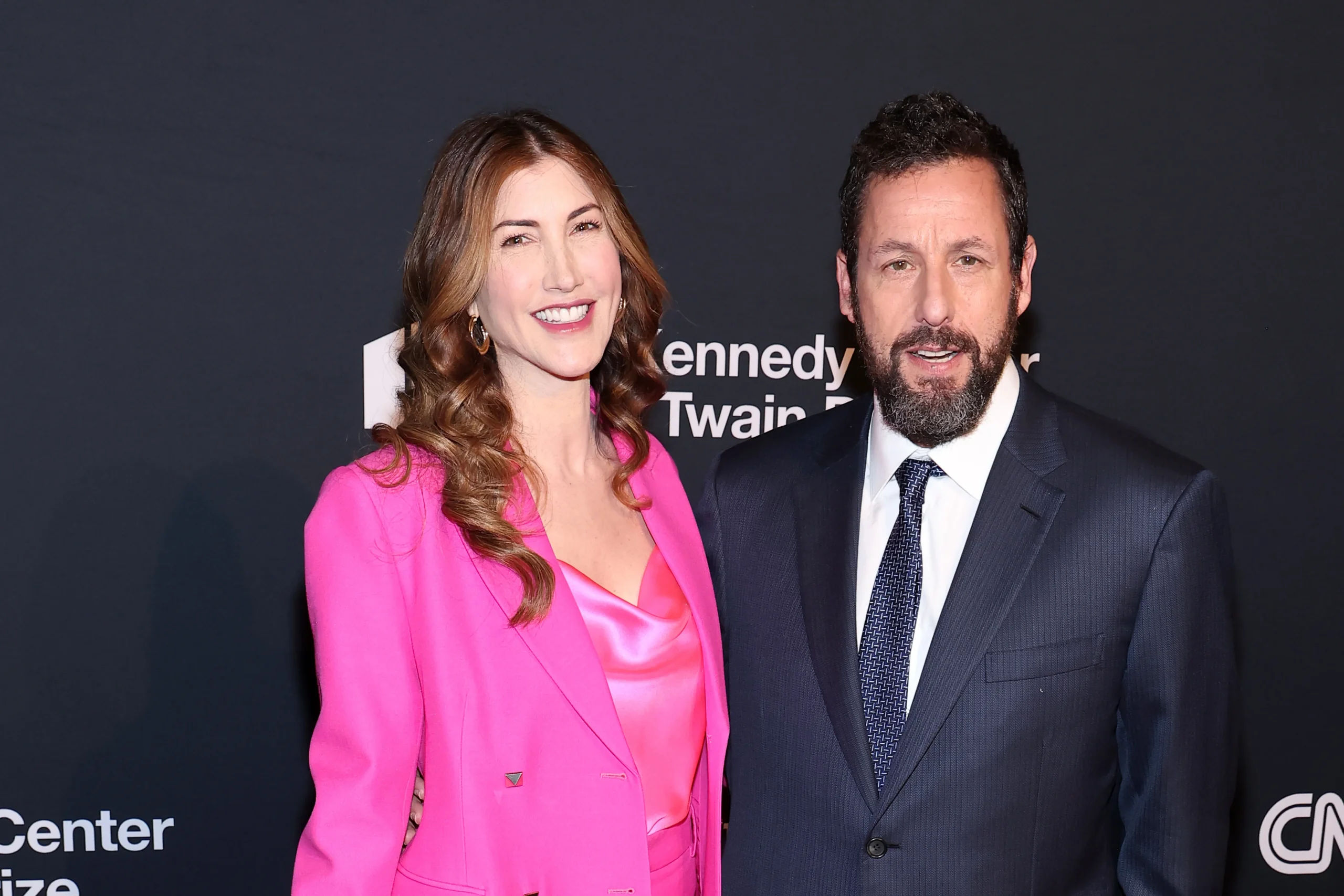
Adam Sandler and Jackie Sandler have built what functions as both a marriage and a long-term creative partnership, with Jackie appearing in over twenty of Adam’s films since they met on the set of Big Daddy. The phrase “Adam Sandler wife Jackie Sandler news” reflects ongoing interest in a relationship that blurs the line between personal life and professional collaboration in ways that have direct economic implications for the projects they produce.
What makes this instructive from a business standpoint is how the couple has integrated Jackie’s presence into Adam’s brand without making her the focal point of that brand. She’s a consistent element—visible but not dominant—which creates familiarity for audiences without requiring her to carry independent star power. That’s a calculated positioning that benefits both parties and the commercial viability of their joint projects.
The Economics Of Onscreen Partnership And Brand Continuity
Jackie and Adam met at a social gathering before working together on Big Daddy, where she played a waitress. They married several years later and have since appeared together in films including 50 First Dates, Grown Ups, and the Happy Gilmore sequel. That recurring collaboration isn’t accidental; it’s a structural element of how Sandler’s production company operates.
From a practical standpoint, this model offers several advantages. Jackie’s involvement provides continuity across projects, which matters for ensemble comedies where familiarity between cast members translates to onscreen chemistry. It also simplifies casting and compensation logistics—one fewer negotiation, one fewer scheduling conflict, one fewer unknown variable in the production equation.
The data tells us that audiences respond positively to recurring collaborations, especially in comedy. The Sandler brand is built on comfort and predictability: familiar faces, similar humor, consistent tone. Jackie’s presence across multiple films reinforces that brand rather than disrupting it. She’s not positioned as a co-star demanding equal billing; she’s integrated into the ensemble in ways that feel organic to longtime viewers of Sandler’s work.
Why Creative Partnership Succeeds When It Aligns With Production Needs
Look, the bottom line is that hiring your spouse only works if it serves the project, not just the relationship. Jackie has carved out a specific niche in Sandler’s films: supporting roles that add depth without overshadowing the central narrative. That positioning is sustainable precisely because it doesn’t create tension with the larger commercial goals of the projects.
What I’ve learned is that onscreen partnerships between spouses often fail when ego or billing disputes enter the equation. If one partner demands creative control or compensation that exceeds their market value, the collaboration becomes a liability. Jackie has avoided that trap by maintaining roles that are consistent with her level of recognition and drawing power. That’s smart positioning, not diminished ambition.
Adam has been public about the fact that working together is something he and Jackie both enjoy, not an obligation or concession. That matters because forced collaboration shows up onscreen. Audiences can detect when chemistry feels manufactured or when casting decisions seem driven by factors other than what serves the story. The success of their repeated collaborations suggests that whatever dynamic they’ve established works both personally and professionally.
The Reality Of Long-Term Creative Collaboration And Career Sustainability
Jackie began her career as a model before transitioning to acting and producing, often in projects connected to Adam’s work. That career trajectory is sometimes framed as derivative—building success through proximity to a more famous spouse—but that framing ignores the strategic intelligence of leveraging available opportunities. She had access to high-visibility projects and used that access to build a sustainable career.
Here’s what actually works in situations like this: clarity about whose brand is primary and how the secondary partner adds value without competing. Jackie’s filmography is dominated by Adam’s projects, which could be limiting if her goal were independent stardom. But if the goal is sustained employment, creative collaboration, and financial security, the current arrangement delivers all three.
From a practical standpoint, Jackie also provides business value beyond her onscreen presence. She’s credited as a producer on several projects, indicating involvement in development and production logistics. That expands her role from cast member to stakeholder, which changes both compensation structure and creative influence. It’s a more sophisticated partnership than simply “actress married to leading man.”
Pressure, Public Perception, And The Nepotism Narrative
The couple married in an outdoor Jewish ceremony at Dick Clark’s Malibu estate, attended by celebrity friends and Adam’s dog, Meatball. That detail—the dog in a tuxedo—is the kind of humanizing specificity that shapes public perception. It frames the relationship as playful and grounded, which aligns with Adam’s public persona and defuses potential criticism about elitism or excess.
What actually happens when high-profile couples work together repeatedly is that nepotism accusations emerge, regardless of the quality of work produced. Jackie’s recurring appearances in Adam’s films invite that critique, and the only effective counter is demonstrating that her presence serves the projects rather than detracting from them. Audience reception and box office performance provide that evidence more convincingly than any defensive statement could.
Adam has described their marriage as centered on making each other laugh, trying to be kind, and spending time together. That framing emphasizes companionship over transactional partnership, which is smart positioning even if it’s also genuine. It preempts cynical interpretations of their professional collaboration by establishing that the relationship exists independent of career considerations.
What Works When Marriage And Business Overlap Structurally
Here’s the reality: mixing marriage and business creates risk that most people avoid for good reason. Conflict in one domain spills into the other. Financial disputes become personal. Creative disagreements threaten relationship stability. The fact that Adam and Jackie have sustained both marriage and professional collaboration for over two decades suggests they’ve navigated those risks successfully.
What I’ve seen work in these situations is clear role definition and mutual respect for each partner’s expertise. If Adam dominates both creative decisions and personal dynamics, the collaboration becomes unsustainable. If Jackie demands creative control that exceeds her experience or market position, the same result follows. The balance they’ve struck—Adam as primary creative force and brand, Jackie as supportive presence and producing partner—appears to serve both parties without creating friction that undermines either marriage or business.
The couple shares two daughters who have also appeared in Adam’s films, extending the family integration into the business model. That creates both opportunity and complexity: additional casting flexibility and built-in chemistry, but also increased scrutiny about nepotism and questions about whether family members are hired on merit or convenience. The fact that audiences continue to respond positively to Sandler’s films suggests that whatever family integration exists onscreen hasn’t damaged commercial viability.
From a practical standpoint, the Sandler model of family integration into business operations only works because Adam’s brand is strong enough to absorb it. If his films were struggling commercially, Jackie’s repeated presence would be cited as evidence of poor decision-making. Because the films consistently perform well on streaming platforms and maintain loyal audiences, her involvement is accepted as part of the formula rather than questioned as a liability.