
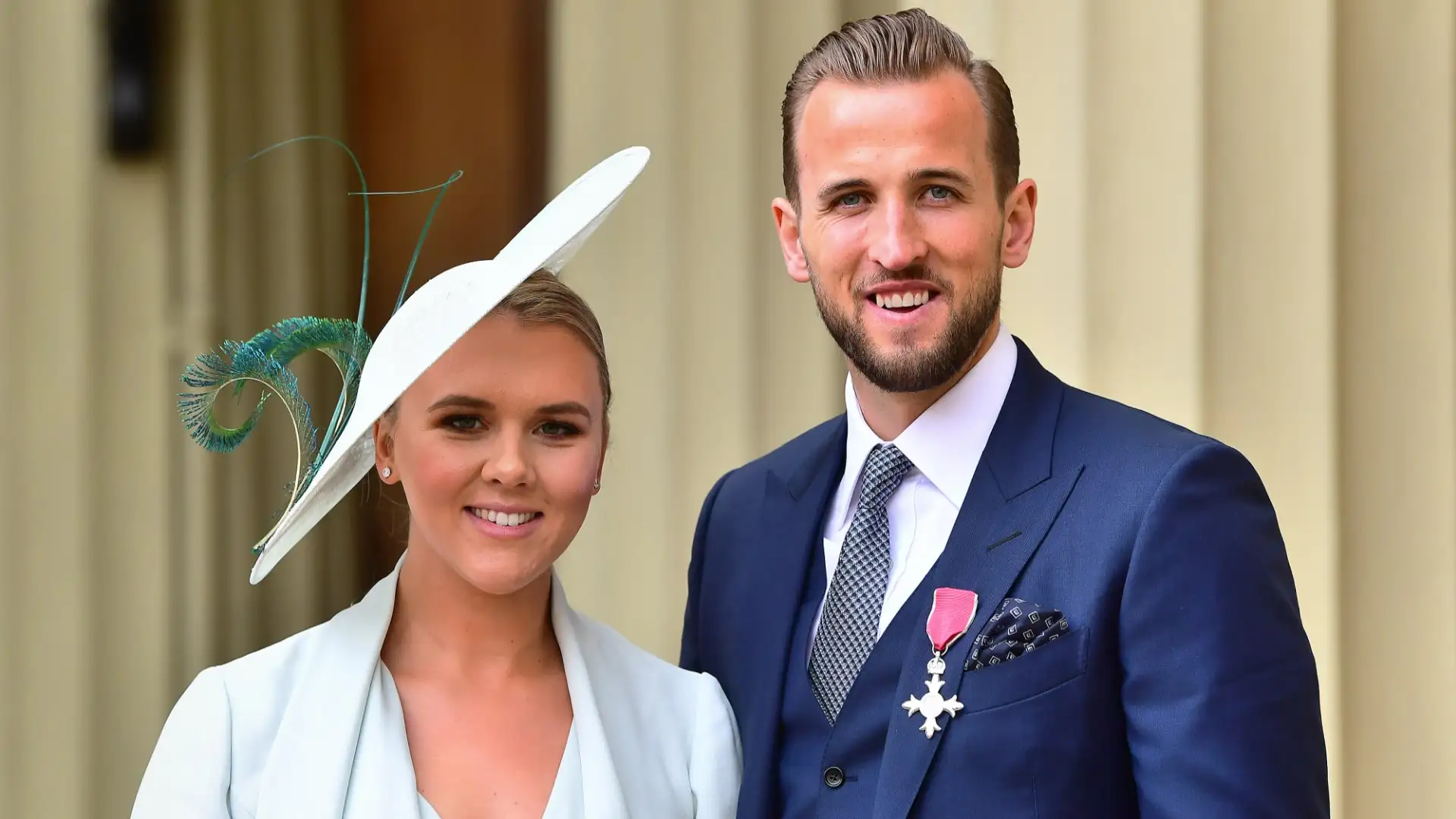
Harry Kane’s wife, Katie Goodland, operates in a space where childhood connection meets adult career complexity. The relationship’s longevity, stretching back to school days, creates a different foundation than partnerships formed after fame arrived.
What makes this dynamic worth examining isn’t the romance, it’s how early-formed relationships adapt when one partner becomes a global sports figure earning massive wages in multiple countries. Katie has described finding her husband’s fame “a little crazy,” a telling acknowledgment of how external transformation affects internal partnership.
How Childhood Bonds Navigate Adult Fame And Geographic Upheaval
Katie and Harry met during their school years, meaning she witnessed the entire trajectory from youth prospect to England captain to Bayern Munich striker. That timeline matters because it creates shared reference points that predate the attention and financial scale.
The couple got engaged during a holiday in the Bahamas when Harry was twenty-three, with the proposal happening on a beach before being shared on social media. They married later, with Harry describing Katie as his best friend.
From a practical standpoint, relationships that form before career acceleration face different adaptation challenges than those that begin after. The trust foundation exists, but the lifestyle adjustment still requires navigation as circumstances transform.
The Reality Of Relocating Family Infrastructure Across National Borders
When Harry transferred to Bayern Munich, the family relocated to Germany with their four children. That’s not just a residential move, it’s restructuring education, social networks, healthcare, language environment, and daily logistics.
Katie, a fitness instructor with a sports science background, manages household operations while maintaining her own professional identity. The couple has two dogs named after NFL quarterbacks, a detail that reveals how they maintain personal interests despite the football-centric public narrative.
The move to Germany following Harry’s transfer illustrates a key point about modern football career management: family mobility is increasingly expected, and the capacity to relocate effectively becomes a competitive advantage. Those who can’t adapt face constrained career options.
What Birth Announcements Reveal About Privacy Strategy Under Scrutiny
The couple has four children, with each birth generating social media announcements and immediate public response. Katie has been open about aspects of the birth experiences, including choosing water births without pain relief and praising Harry’s role as a birthing partner.
These selective disclosures represent calculated privacy management. Sharing some details satisfies public curiosity while maintaining boundaries around other aspects of family life. It’s a strategy common among high-profile couples, though execution varies widely.
Here’s what actually works: providing enough access to meet media demand without surrendering control over the family narrative. The alternative, complete privacy, is nearly impossible at this career level, and the attempt often generates more intrusive speculation than selective transparency.
The Risk Cycle When Personal Life Becomes Performance Metric
Harry once joked that he would only cry at his wedding if England won a trophy, a comment that highlights how personal moments get filtered through professional achievement. That kind of framing is common in sports culture, but it also reveals the pressure to subordinate private life to public performance.
Katie’s comment about finding the fame “crazy” suggests an ongoing adjustment process rather than comfortable acceptance. The data tells us that partners who enter relationships pre-fame often struggle more with visibility than those who meet afterward, because the change disrupts an established normal.
The family maintains a relatively low public profile compared to some football partnerships, with Katie keeping social media presence minimal. That restraint is strategic, limiting exposure that might otherwise amplify scrutiny on the children as they grow.
Why Long-Term Partnership Success Depends On Invisible Infrastructure
The public sees match-day appearances, social media birth announcements, and relocation headlines. What remains invisible is the daily coordination required to manage four children across international moves while both partners maintain professional commitments.
Katie’s fitness and sports science background likely informs how the household approaches health, training, and child development. That expertise isn’t decorative, it’s functional infrastructure that supports Harry’s performance by managing adjacent life complexity.
Look, the bottom line is this: relationships that survive the transition from normal life to global fame require more than emotional connection. They need systems for decision-making, resource allocation, boundary management, and role clarity.
What I’ve learned from observing these partnerships is that the ones that endure are those where both parties have defined contributions beyond their relationship to the primary earner. Katie’s professional background and role as primary parent coordinator give her authority and purpose independent of Harry’s career trajectory.
The challenge ahead involves maintaining that balance as the children age and as Harry’s career potentially includes further relocations. Each move resets the adjustment cycle, requiring new schools, new social networks, and new daily routines. The capacity to manage that ongoing disruption without eroding partnership stability is what separates sustainable arrangements from those that eventually fracture under accumulated stress.

Previous Article
Frank Lampard wife newsNext Article
Marcus Rashford wife news